If you picture a San Clemente surf home as any place with an ocean view, you could miss what matters most. For everyday surf access, the better question is whether the home fits your actual routine: how fast you can get to the break, how easy it is to carry boards, where you will park, and whether the access point works at the times you surf. If you are buying with waves in mind, this guide will help you evaluate a property the way a local surfer would. Let’s dive in.
Start With the Surf Corridor
In San Clemente, surf access is most practical along the in-town coastal corridor from North Beach through the Pier Bowl and T-Street to Calafia. The Beach Trail connects this stretch, running 2.3 miles from North Beach to Calafia with stops at the Pier and T-Street.
That matters because a home can feel close to the ocean on a map but still fall outside the most useful walk-and-surf band. In this market, access is often block-specific, so the real test is the route from the listing address to the beach entry, not just the straight-line distance.
Why walkable access matters
A walkable surf setup can change how often you actually get in the water. If you can leave the house, grab a board, and be at a reliable access point without loading the car, the home supports a very different lifestyle than one that looks coastal but requires a longer drive or a more complicated path.
The Beach Trail also adds flexibility. Parts of the trail are ADA accessible from North Beach to Mariposa and from Linda Lane to the Pier, and the trail is generally open from 4 a.m. to midnight, except the segment from the south T-Street restrooms to Calafia, which is open from 6 a.m. to 10 p.m.
Evaluate the Main Access Points
Not every surf access point in San Clemente functions the same way. Some are easier for daily use, while others work better as occasional spots.
North Beach access
North Beach is one of the most functional in-town access points. It offers metered parking, restrooms, and a train station, which makes it useful if you want walk, bike, or rail access built into your routine.
For buyers, North Beach can be a smart anchor because it combines beach access with transportation options. If you expect early sessions before work or want flexibility for guests, that mix can be especially useful.
Pier Bowl access
The Pier Bowl is the city’s most heavily used coastal access area. It is popular for surfing and body boarding, and it also concentrates parking, transit, and beach amenities in one place.
This area is especially practical if you want a home near a well-supported beach entry. Parque Del Mar includes the main pier entrance, the Amtrak and Metrolink station, and 160 public parking spaces, while Linda Lane Park adds about 131 public metered spaces.
T-Street access
T-Street is immediately south of the Pier and sits on a permanent hard-bottom reef that helps create a consistent surf break. The city also identifies T-Street as a popular surfing area, which is why many buyers place it high on their list.
But access here is not just about the quality of the break. T-Street has stairs, concessions, fire rings, metered parking, and restrooms, with city hours from 4 a.m. to 10 p.m., so it works well for many day-to-day surf routines.
Calafia access
Calafia is often more functional than buyers expect. It has a parking lot, concessions, restrooms, and short stairs over rocks, which can make it a practical choice if you want a southern in-town option with more support than some smaller access points.
For a buyer comparing homes, Calafia can be worth a closer look if the house is not walkable to the Pier or T-Street but still gives you a manageable drive and straightforward setup.
Watch for Access Friction
The best surf home is not always the one nearest the sand. Often, it is the one with the least friction between your front door and the lineup.
Check the real route
Before you fall in love with a listing, map the actual trip from the address to your likely surf entry. In San Clemente, small changes in elevation, stairs, trail access, and street layout can make a big difference.
A home may be only a few blocks away but still require a less convenient approach than another property that is technically farther. That is why block-level analysis matters here.
Compare stairs and ease of entry
Some spots are much less convenient for everyday use. Lost Winds is stairs-only with street parking, no facilities, and a steep path, while Riviera is also stairs-only with street parking and no facilities.
Those locations may still appeal to some buyers, but they usually create more friction for regular sessions. If you surf often, easier entries with parking and restrooms may fit your routine much better.
Factor in hours and seasonal rules
Access rules can affect how useful a nearby break really is. At T-Street, board surfing is prohibited from June 14 to August 18 between 11 a.m. and 6 p.m. daily.
That does not make T-Street less desirable across the board. It simply means the area may be a better fit if you prefer early-morning or evening sessions rather than midday summer surf.
Look Closely at Parking
Parking is a quality-of-life issue for surf buyers in San Clemente. If your routine depends on driving to the break, your home should make that easy, not turn every surf check into a curb-space search.
Understand city-operated parking
The city’s metered parking rate is $1.50 per hour. Annual permits cost $50 for residents and $100 for non-residents, and those permits work at city-operated spaces at North Beach, Linda Lane, Parque Del Mar and Pier Bowl, and T-Street.
That can be a meaningful benefit if you expect to surf often at those locations. It also helps to know that the Pier Bowl offers mobile pay through Passport Parking.
Know which lots are not permit-eligible
City parking permits do not apply to the state-operated Calafia and Trestles lots. That distinction matters because two homes with similar map locations can lead to different ongoing access costs and routines depending on where you actually surf most.
At North Beach, selected spaces near the Metrolink station are $1 per day Monday through Friday if you arrive between 4 a.m. and 9 a.m. After 9 a.m., those spaces revert to the normal meter rate.
Evaluate the House Itself
A surf-friendly property should support your gear, your timing, and your daily flow. In many cases, the right setup inside the property matters as much as the distance to the beach.
Prioritize storage and rinse space
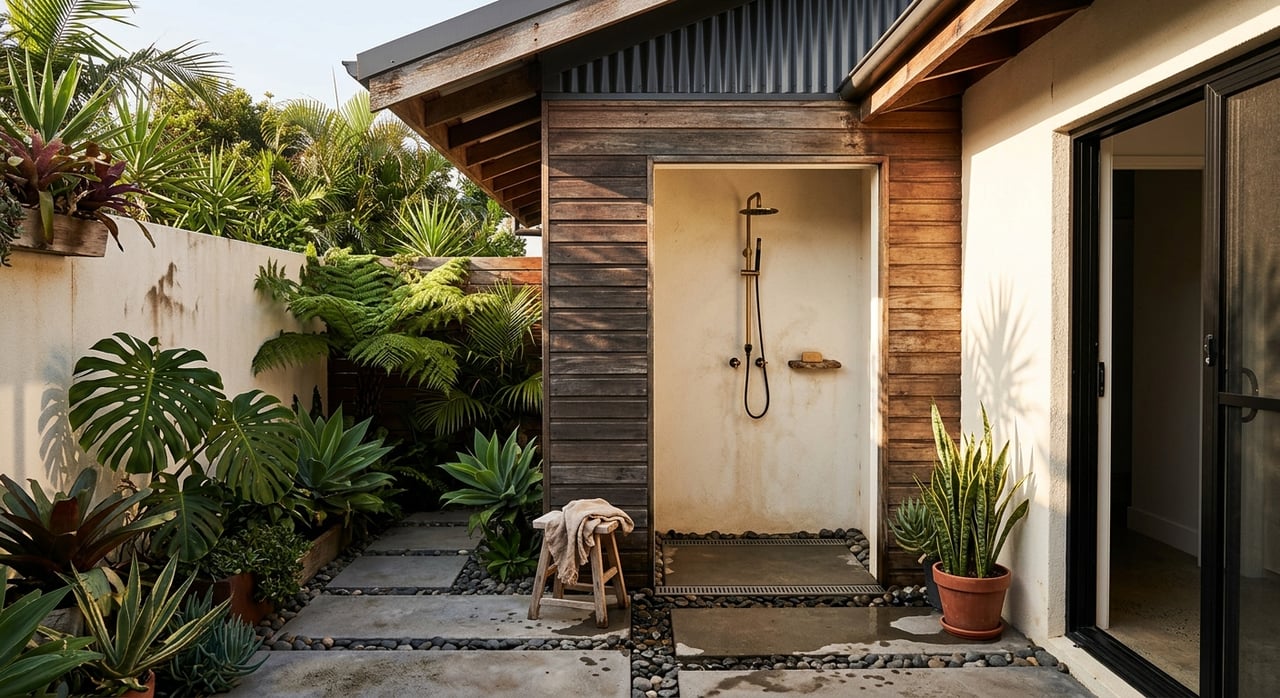
The most useful features for surf buyers usually include a garage or side-yard space for boards, a rinse or shower setup for saltwater gear, and a place to dry wetsuits. In San Clemente, that practical setup matters because public amenities vary a lot from one access point to another.
Some public surf areas offer showers or rinse infrastructure, but others do not. Since Lost Winds and Riviera list no facilities, a private rinse setup at home can make a noticeable difference if you surf regularly.
Look at parking on the property
Off-street parking can be a major plus for a surf-focused household. If you are constantly loading boards, wetsuits, and beach gear, you do not want your home life to depend on open curb space every morning.
This is especially important near high-demand areas like the Pier Bowl and T-Street. A home with easier loading and unloading can outperform a closer home with a more frustrating setup.
Review HOA rules carefully
If you are buying a condo or townhome, confirm HOA rules before you commit. Pay close attention to board storage, wet gear, hose use, and parking.
For surf buyers, these are not minor details. They directly affect whether the property supports the lifestyle you are buying for.
Match the Home to Your Surf Schedule
A good surf home should fit when and how you surf, not just where you want to be on a sunny afternoon. The right property often depends on your preferred season, time of day, and break.
Think seasonally
In Southern California, swell patterns shift through the year. NOAA notes that swell is predominantly from the northwest, while late-summer swells with south-to-southwest direction become more frequent.
That means your ideal home base may depend on whether you chase summer and fall sessions, want flexible year-round access, or build your routine around certain breaks.
If Trestles is your goal
Trestles is in a different category from the in-town San Clemente access points. California State Parks says it is inaccessible by vehicle and requires a long walk via nature trail, with the San Mateo Campground trail measuring 1.5 miles to Trestles.
If Trestles is central to your lifestyle, you are not really shopping for a walk-to-surf neighborhood routine. You are shopping for a home that supports an I-5-and-trail routine, including early departures, board transport, and a property setup that makes that process easy.
Ask about recent beach conditions
San Clemente’s shoreline can change over time, and the city’s resiliency planning notes that shoreline change can alter surf conditions at T-Street and other locations. That makes recent local context valuable when you evaluate a home.
Instead of relying only on a beautiful listing day, ask how the beach has behaved over recent winters. That kind of practical insight can help you judge access more realistically.
A Simple Surf-Access Checklist
When you tour a San Clemente home, keep your evaluation grounded in daily use. A quick checklist can help you compare properties more clearly.
- Is the home inside the practical access corridor from North Beach to Calafia?
- Which breaks are truly walkable from the address?
- Does the route involve stairs, steep paths, or awkward loading?
- Is the nearest parking city-operated, permit-eligible, or state-operated?
- Does the house have space for boards, wetsuits, and a rinse setup?
- Will the property work for early-morning or evening sessions?
- If the home is a condo or townhome, do HOA rules limit surf storage or hose use?
- If you plan to surf T-Street often, does your schedule still work with the summer midday restriction?
The strongest surf-access home is usually not just the closest one to the water. It is the one that combines realistic access, dependable parking, and a property setup that makes your surf routine feel easy week after week.
If you want help comparing homes through a true lifestyle lens, Jim and Liz Habig can help you evaluate not just the address, but how the property actually works for your day-to-day coastal rhythm.
FAQs
How do you evaluate a San Clemente home for surf access?
- Focus on the actual route to the beach, nearby parking, access hours, surf restrictions, and whether the property supports board storage, rinsing, and easy loading.
Which San Clemente surf areas are most practical for daily access?
- The most practical in-town corridor runs from North Beach through the Pier Bowl and T-Street to Calafia, with the Beach Trail connecting those access points.
Is an ocean-view home always better for surf access in San Clemente?
- No. A home with a view can still be less functional than one inside the main access corridor with easier walking routes, parking, and gear management.
What should condo buyers check for surf access in San Clemente?
- Confirm HOA rules for board storage, wet gear, hose use, and parking, since those rules can directly affect your surf routine.
Is T-Street a good surf-access area year-round in San Clemente?
- It can be, but board surfing is prohibited there from June 14 to August 18 between 11 a.m. and 6 p.m. daily, so it is often a better fit for early or late sessions in summer.
How is Trestles different from other San Clemente surf access points?
- Trestles requires a long walk via nature trail and is not vehicle-accessible at the break itself, so buyers should treat it as a drive-and-trail routine rather than a neighborhood walk-to-surf setup.